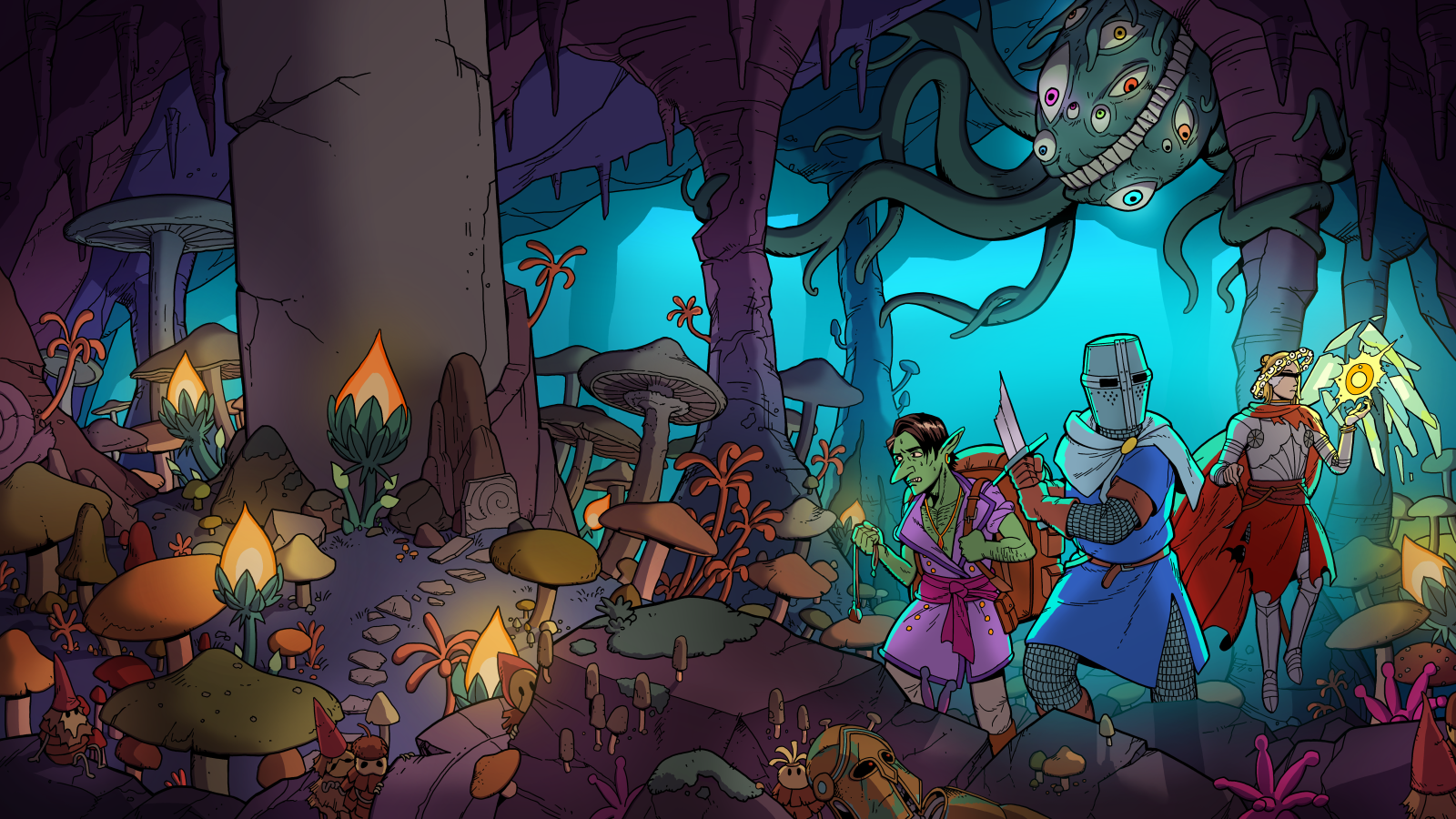
Der findes spil, og så findes der spil. Esoteric Ebb hører unægteligt til i den sidstnævnte kategori og er efter min mening en af de absolut bedste titler, der er udkommet i de senere år. Vi overøste det med ros i vores anmeldelse i starten af marts, for det har virkelig fortjent den modtagelse, det fik. Men præcis som med spil, så findes der også spiludviklere, og så findes der folk som Christoffer "Chris" Bodegård. Han præsterer den bedrift både at levere et spil af afsindig høj kvalitet (læs vores anmeldelse af Esoteric Ebb her) og samtidig være så ulideligt flink, vidende og sjov på én og samme tim.
Inden Esoteric Ebb udkom, var der en hel del nervøsitet og stress op til lanceringen. Bodegård vidste af gode grunde ikke, at han stod med et gigantisk hit mellem hænderne, så vi syntes, det var på høje tid at sætte os ned til en snak om spillet i kølvandet på den overvældende modtagelse.
Ligesom altid har vi bibeholdt Bodegårds svar på original sprog, for at bibeholde autencitet.
Bodegård: "Hey there again! Things have actually just started to calm down properly for the first time. There's about a month to go now until the Steam Summer Sale, and things will probably heat up again then. But right now? It's dead calm!"
Og et kæmpe stort tillykke med udgivelsen av Esoteric Ebb. Hvordan har de seneste måneder været for dig følelsesmæssigt?
Bodegård: "Thanks! It's actually been really nice. After version 1.2 was released, I felt the game was in good enough shape to start making some longer-term plans. Things like potential localisation, porting, and so on. All that takes time, so right now I'm mostly doing a lot of groundwork and enjoying the fact that the game is a success!"
Hvornår begyndte det at gå op for dig, at spillet rent faktisk var ved at slå igennem for alvor?
Bodegård: "Four moments: the first was when I showed it to my sort-of mentor at the park. He's the sort of person who's very sparing with praise, so when he said, 'This is actually quite good,' I knew I was on the right track. The second time was when the PC Gamer article first came out, and I woke up to a dozen messages from people congratulating me. And the third time was when the demo made it into the top ten on Steam Next Fest on the last day. And finally, the fourth time was when I saw that the game had reached 'Overwhelmingly Positive' on Steam. It's absolutely mad that it's gone so well."
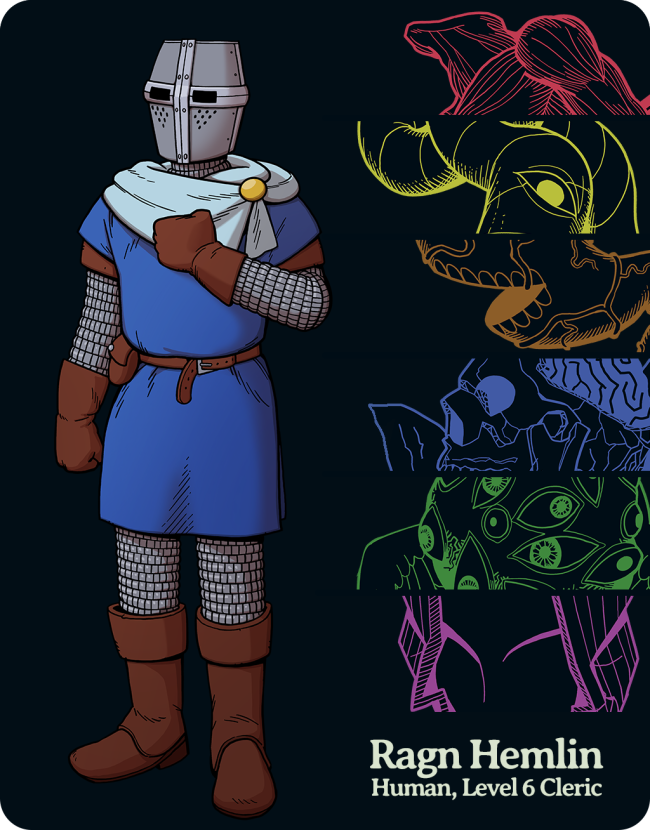
Nu hvor folk rent faktisk har spillet Esoteric Ebb færdigt - hvilken reaktion fra enten spillere eller pressen har overrasket dig mest?
Bodegård: "I suppose what surprised me most was how many people were moved to tears. I myself felt very emotional when writing certain passages, but I've never written anything before that had such an effect. But I suppose that if you shed a tear whilst writing it, perhaps that somehow rubs off on the readers."
Er det også en smule grænseoverskridende? At folk knytter sig så stærkt følelsesmæssigt til noget, du har siddet helt alene og skrevet på i flere år?
Bodegård: "I suppose my overall aim in writing is simply to make the player feel something. So I feel it's been quite a success! I like to shock and surprise, sort of. And I think the best way to do that is to present a story that might seem superficial - like a colourful and comical D&D adventure - and then slowly persuade the player to care excessively about the world and its characters. So I'm really just happy that I've managed to make people feel something, for a brief moment."
Du har arbejdet på spillet i rigtig lang tid. Hvor meget føler du, at både du selv og projektet har ændret sig undervejs?
Bodegård: "I've actually got the hang of interactive writing! It took a few years. Politically, I've also changed and grown a lot, which was the whole point. I really wanted to use Ebb as a way of exploring my own ideological journey - so now I'm absolutely ready for the election this autumn!"
Føler du måske, at udviklingen af spillet har gjort dig mere ydmyg over for, hvordan folk rent faktisk agerer i politik? Altså, har Esoteric Ebb også været en øjenåbner for dig selv?
Bodegård: "Yeah, I learnt a hell of a lot about people, that's for sure! I think I also became increasingly aware of just how much we're all driven by ideology. That is to say, the ideas and concepts we debate are always created and filtered through our material circumstances. And when circumstances change, it's bloody important to keep track of exactly how. Especially today, when circumstances seem to change every single week (or so it feels), our ideologies have to keep up."
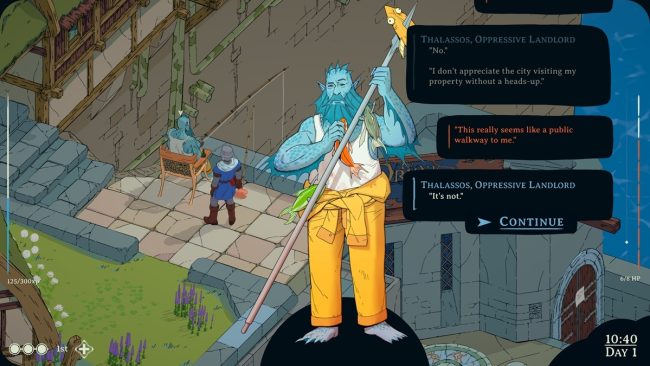
"Luckily, I wrote most of Ebb's text in 2025 (about 600k words), so everything is as relevant and 'up to date' as I possibly could make it. Then it'll be interesting to see how long all this stuff I'm writing about stays relevant."
Efter så mange år med det samme projekt - er det så svært overhovedet å vide, hvem man selv er uden spillet længere?
Bodegård: "Interestingly enough, it feels more like this world is simply a natural progression of everything I've created since I was old enough to make things up in my head. And especially since everything in the game is so connected to and influenced by all my D&D adventures, it feels more like I've just been playing a really big, digital campaign that everyone gets to be part of rather than just my usual players/mates. But it's really nice to take a break after such an intense session, hah!"
Har spillerne fra dine tidligere kampagner kunnet genkende sig selv i karakterer eller situationer? Og er der en mission eller en karakter i spillet, som bogstaveligt talt blev undfanget omkring et bord med terninger och snacks?
Bodegård: "No quests are directly linked to the campaigns; it's mostly just characters and references that are relevant in that way. But I made sure to send the dialogue for Ôst, Kraaid, The Duck, and Razz to my players, so they could double-check the voices and tone. Their secret boss fight was very popular, I can tell you. Plus, the lads are absolutely chuffed that people liked their brilliant Slogdog joke."
Du har tidligere nævnt, at arbejdet på Esoteric Ebb begyndte, før Disco Elysium udkom. Føles det befriende eller frustrerende, att så mange stadig beskriver spillet ved hjælp af netop den sammenligning?
Bodegård: "That particular comparison is definitely intentional! It was my strategy from the outset to create a game that would be compared to DE, but which differs in tone and content. I knew that if I used the Chimes system, along with this vertical dialogue format, and followed the same non-linear design philosophy - that would be enough for people to hold them up side by side. At the same time, I also knew I'd never be able to reach the same level of literary depth and Eastern European wisdom. So I didn't even try. Ebb is a fun D&D session with me, and nothing else. I make that as clear as I can right from the start of the game - which I think means that the comparison with DE ends up being a positive thing. And I see it as a huge compliment that some people even compare the writing! Although my style is much simpler, I probably got better and better at prose during production. There are some bits towards the end of the game that I'm really proud of!"
Tror du, at folk indimellem undervurderer, hvor svært det rent faktisk er at skrive denne type spil?
Bodegård: "People underestimate just how difficult it is to make games in general, and interactive writing is certainly part of that phenomenon. But as someone who likes to use figures in my arguments, I usually point to Steam's own statistics: the two genres on the platform that sell best (on average) are - if I'm not completely off the mark - role-playing games and strategy games. Why? My theory is that it's simply because, on average, they are the hardest games to produce. And RPGs with interactive narratives are, in a way, a niche within that niche.
I also think the problem is that the know-how simply isn't there. People compare 'game narratives' between The Last of Us and Disco Elysium as if they exist within the same practical art form, and I just don't buy that. Both are wonderful. But I would never assume that the person who wrote the script for one would have the skills to create the script for the other. And in the average discussion about games (among both players and developers), it seems that the distinction simply doesn't exist in the vocabulary. That's my view, at any rate.
One thing I'm trying to do with the little I've learnt during Ebb's development is to spread that knowledge. If indeed there is such a thing. Simply because I'd love to see more games that make use of interactive writing. 'Interactive Writing' is, incidentally, a term I had to sort of make up, precisely for this reason. There's otherwise no real term that describes the practical work where writing and design come together. As far as I know, anyway.
And personally, I prefer to look stupid."
I dag prøver mange indiespil at være meget finurlige eller smarte i deres dialog. Hvad mener du adskiller velskrevet spildialog fra tekst, der bare prøver at lyde klog?
Bodegård: "A lot of it comes down to taste, which is hard to define. Many people think my style is also 'millennial quirky' - and especially with comedy, which is so incredibly subjective that you can barely analyse it. But generally, I try to create characters who could actually exist. That's sort of my fundamental goal - that the dialogue should stem from logical character traits and that these people could have existed in real life.
And personally, I prefer to sound stupid. I went through a phase in my life where I wanted to sound clever. But the more I learn about everything, the more I'm content to accept that I still have a great deal left to learn."
Er det derfor, at en del dialog i spil kan føles som om, karaktererne prøver at vinde et skænderi i stedet for at tale som rigtige mennesker?
Bodegård: "Partly. That's also the reason why we shoot so many people in so many games. Conflict is fun! But I'd also say that game dialogue in particular struggles with subtlety. A good film script should probably have a lot of so-called subtext, where you have to read between the lines to get the point. It would be strange if everyone just said exactly what they were thinking and feeling. But if the player is controlling one of the characters - then the game writer has to make sure the player gets that subtext! And it's incredibly difficult to get the player to keep up and make informed choices. That's why it makes sense (and I do it all the time too) to be much clearer in the writing, and specifically to let the player control characters who are overly 'clear' in how they speak and think.
Here's yet another reason why Disco's skill system is so brilliant. Through internal monologues, it's much easier to let the player get the point without it feeling too stiff. This is actually one of many things I researched during my time at university! I'm very intelligent."
Spillet rammer en meget naturlig balance mellem humor og ret mørke, eksistentielle temaer. Har du en personlig grænse for, hvornår en joke går for vidt, eller hvornår en scene bliver for tung?
Bodegård: "I genuinely believe you can joke about anything. It's just a question of when and how. Which are two pretty damn important points. In Ebb, I tried to maintain exactly the same tone as I do when I run D&D - that is, darkness exists and the world is realistic. I have zero interest in exploring certain topics, and every interest in exploring certain others. I was definitely nervous when I chose to delve into certain darker themes in the game, but I see it this way: if it's scary to write about it, then it's probably worth exploring. It's just a matter of writing it in a way that's well-researched, deeply developed, and genuine. Sounds easy, doesn't it?"
Hvad var det sværeste ved at skrive Esoteric Ebb? Ikke det mest teknisk udfordrende aspekt - men rent følelsesmæssigt.
Bodegård: "The internal political debates. I saved them until the end - three months before the game was released. Because I knew that a great deal of the protagonist's political development would be based on precisely these, and I also knew that they would be severely limited by my own political and philosophical knowledge. But I drank loads of tea and sat down in early December 2025 and wrote them all, one by one. And it was here that I really had to examine exactly what my own biased thoughts, fundamental ideological pillars, and feelings were regarding topics such as democracy, men and women, migration, and loneliness.
Then I didn't really have time to go through it all, so I just had to put it out there and see what people thought. It was scary. I had no idea whether what I'd written was coherent, well-written, or socially acceptable. It's very interesting to read what people are writing about it online, though."
Du har skrevet en enorm mængde dialog til spillet. Var der en karakter, en mission eller en scene, som nær havde drevet dig til vanvid at gøre færdig?
Bodegård: "All the bloody encounters. That was the only part of the game where I actually enlisted the help of my editor, Phil Jamesson, who had to write drafts for four of the later battles, based on my design. There's just so much unique content that needs to be written for these - imagine, they can be played in so many different orders. There are so many different choices - every round must have unique attacks and actions. And every subsequent round is influenced (and often entirely based on) the choice you made previously. And for there to be tactics and strategy and AGENCY in these, everything has to be properly designed as well. I'm very proud of the final boss fight, though. It's really cool."
Er der et aspekt af Esoteric Ebb, som du er særligt stolt af, men som spillerne måske ikke har lagt mærke til endnu?
Bodegård: "There are a few mechanical quirks in the design that trick players into thinking they're doing better than they actually are. This leads to more exciting 'clutch moments' I'm very proud of that, especially since literally zero players have noticed it."
Hvor meget af spillets verden, karakterer eller atmosfære er hentet fra dine egne erfaringer, svenske miljøer eller folk, du har mødt i dit liv?
Bodegård: "Pretty much everything. It's fun to see people around the world comparing Norvik to their own experiences, but at its core, it's a very Swedish story. What exactly that means is open to interpretation - just like all the other allegories I play with, I like to let the player decide for themselves."
Du virker meget interesseret i politik, filosofi og samfundsstrukturer. Synes du, at spilmediet er blevet bedre eller dårligere til at skrive om den slags emner i løbet af de sidste ti år?
Bodegård: "I'd say that the gaming medium hasn't developed much over the last ten years. The industry has changed a lot, but the art itself (and how indie creators build) feels the same as when I started the process in 2015. Compared to 1995 to 2005, and 2005 to 2015, it's like night and day. So today I'm mostly interested in developing interactive writing as a format for exploring, as you say, politics, philosophy and social structures. Games are, in my opinion, the hardest medium in which to create narrative. Which is why it has also, historically speaking, been seen as a medium with poorer storytelling. It's bloody hard to create good narratives in games! And when we do succeed? Then it's mostly through linear storytelling. Usually through an emulation of film. And there's absolutely nothing wrong with emulating film. Film is brilliant. But I don't want to make films. I don't want to write linear stories. I want to make games."
Du siger, at spilmediet ikke har flyttet sig meget de sidste ti år - men er der et moderne spil, der rent faktisk gav dig følelsen af, at 'okay, her sker der noget nyt'?
Bodegård: "Oh yes, loads! Most of them are games that haven't been released yet, but which will hopefully be released in a few years' time. Sometimes I get a few private previews, which is fun. But of games that are out there, which have really succeeded with interactive writing...
Pentiment was an instant classic. Incredibly well-designed. Roadwarden had a really interesting structure and a cool world. Citizen Sleeper managed to blend extremely cool systematic storytelling with interactive writing.
And then, Baldur's Gate III managed to hold a narrative together with interactive writing, even though the player character is completely dynamic. Which might not sound like much of a challenge, but I promise you - there's a reason why all the great examples of interactive writing throughout history (from Planescape: Torment to Mass Effect) always have a very restrictive protagonist.
I just didn't have time to write unique thought bubbles for every single character in the game. Because there are over sixty characters. It's mad."
Var der nogen idéer eller systemer, du elskede, men som du i sidste ende var tvunget til at skære væk?
Bodegård: "Teleportation and mind reading! Two spells, Misty Step and Detect Thoughts, both of which are technically implemented in the game. But both are unusable. Misty Step was simply too tricky to implement - I didn't have enough areas where it would be interesting to teleport, and if I'd allowed the player to teleport anywhere on the map, they'd have got stuck. And you can cheat your way through Detect Thoughts if you want - but if you try to read someone's thoughts, the dialogue is just empty. I simply didn't have time to write unique thought dialogues for every single character in the game. Because there are over sixty characters. Crazy."
Give me $500 million and ten years, and I can sort it out for you! Thanks!"
Hvis du fik et ubegrænset budget og et større hold - hvad ville så være det første, du ville udvide i Esoteric Ebb?
Bodegård: "To be honest, I wouldn't have done anything major. Perhaps you could add a few more visuals, sort out the voice acting, and polish it up a bit more - but I'm happy with Ebb.
But if you gave me endless funds to make another game, I'd definitely start production on a first-person open-world immersive sim set in Norvik. Imagine Ebb's art style, but in first-person, and with all the 5e mechanics adapted for a game that both emulates D&D and acts as an Elder Scrolls Killer. Give me $500 million and ten years and I can sort it out for you! Thanks!"
Hvordan ser du fremtiden for denne type narrative rollespil? Er der en risiko for, at genren bliver for fastlåst af et enkelt spil og dets eftermæle?
"I think the main risk is that the genre will lure in developers who think they're producing a similar game without focusing on interactive writing. Disco Elysium was a magical evolution of Planescape: Torment - and Esoteric Ebb is perhaps a mix of the two. Now, I'm obviously very biased, but I think these three reach a level of interactive writing that I prefer. There are a few other games that spring to mind, such as Troika's Arcanum and Bloodlines. Deus Ex too. New Vegas? But honestly, it's so rare that I just hope Disco Elysium's legacy leads to more games like that - games that I like."
Opdatering:
Esoteric Ebb udkom på PC i starten af marts - og som svar på et spørgsmål om, hvorvidt spillet udkommer til flere platforme (først tilføjet, efter interviewet var afsluttet), svarede Chris følgende:
"I want to release Ebb on every possible platform, but nothing has been decided yet. So we'll see if it's one specific platform first, and more later, or if it's all at once, like in 2027/2028!"